
Singapore Phases Out Gifted Education Programme, Rolls Out Advanced Learning Modules in 15 Schools
Education
Starting next year, 15 primary schools in Singapore will offer advanced learning modules under a new approach to support students with high abilities, the Ministry of Education (MOE) announced on Tuesday (Mar 3).'
The selected schools are Ahmad Ibrahim Primary, Clementi Primary, Geylang Methodist School, Innova Primary, Jurong West Primary, Kheng Cheng School, Palm View Primary, Pioneer Primary, Punggol View Primary, Queenstown Primary, St Gabriel's Primary, Tampines Primary, Teck Ghee Primary, Yew Tee Primary, and Yu Neng Primary. The schools were chosen to ensure geographic coverage across Singapore and ease of access via public transport, MOE said, noting that the list will be reviewed periodically.
This move follows the government’s decision to discontinue the Gifted Education Programme (GEP) in its current form. Under the new approach, approximately 10 per cent of the student cohort will have access to school-based high-ability programmes that are already available in all primary schools. Students who show particular strengths can then opt to attend after-school advanced modules at one of the 15 designated centres.
Unlike the previous GEP structure, these modules are independent of the national curriculum, and students will no longer need to transfer to one of the nine primary schools that previously hosted the GEP. The nine former GEP schools will cease operating as GEP centres, and their experienced teachers may either instruct the new centre-based advanced modules or continue teaching at their own schools.
Expanded Access and Flexible Learning
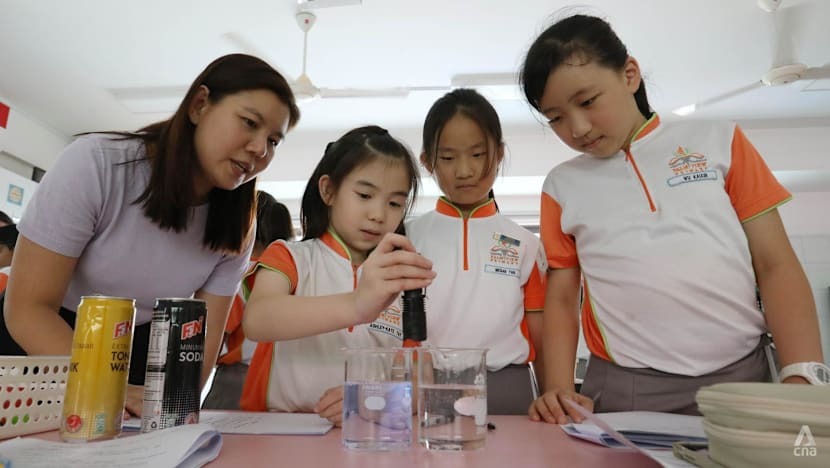
The 15 centres will offer two types of advanced modules. Weekly two-hour after-school sessions during term time will focus on English, mathematics, or science. In addition, interdisciplinary modules will be held during school holidays. Classes will be led by specially trained teachers with experience in supporting students with high abilities in specific areas. These instructors will not be drawn from the school hosting the module centre.
Because the modules target strengths in particular domains, a larger number of students will be eligible—potentially double the number previously enrolled in the GEP, MOE said. Participation is voluntary, allowing students to exit and re-enter the programme as needed, while schools will be encouraged to nominate students strong in multiple areas for only one subject per semester.
MOE emphasised that the modules are not designed to give students an advantage in examinations. Instead, they aim to nurture curiosity, creativity, and critical thinking, supporting the development of each student’s potential.
Simplified Identification Process
The new approach also marks a change in how students are identified for high-ability programmes. Previously, GEP selection required strong performance across English, mathematics, and science in a two-stage process. Under the revised system, students do not need to excel in all subjects to qualify. For example, a student talented in English but average in mathematics may still participate in an English-focused high-ability programme.
Primary 3 students this year will be the first to be assessed under a new, one-stage standardised identification exercise in August, complemented by school-based observations of learning attitude and potential using guidelines provided by MOE. In future years, schools will also be able to nominate eligible Primary 4 and Primary 5 students for the school-based high-ability programmes and advanced modules.
With this change, Singapore aims to provide broader access to students with specific talents, offering flexible learning opportunities that encourage deeper exploration in areas of strength while maintaining a supportive, school-based environment.


